


Stock Bag With Card-Slit
Stock Coffee Bag With Card-Slit: A Cost-Effective Choice and Upgrading Trend in Coffee Packaging
In today’s highly competitive coffee industry, packaging serves not only as a protective container for products but also as the first "business card" for a brand. For emerging brands and small-scale roasteries, the high costs of custom packaging and long delivery cycles are often major obstacles to their growth.
However, Stock Coffee Bag With Card-Slit, leveraging their cost-effectiveness and functional advantages, have become the preferred solution for small and medium-sized enterprises (SMEs).
This packaging solution not only addresses businesses’ core pain points but also fits diverse consumption scenarios.
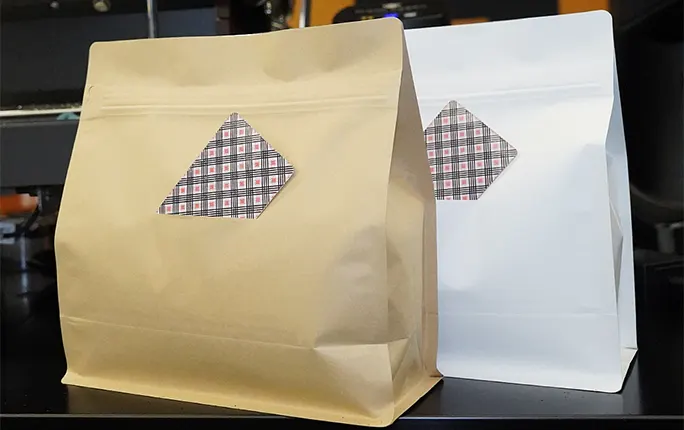
I. Stock Coffee Bag With Card-Slit: A Cost-Saving Solution for SMEs
Ready-to-stock coffee bags are pre-produced standardized packaging, which differs significantly from custom packaging. Their core advantages are highly aligned with the operational needs of SMEs, making them an ideal choice for achieving a "low-threshold start".
1. Controllable Costs and Lower Entry Threshold
Custom coffee bags require payment for design and plate-making fees, with an MOQ that usually exceeds 10,000 units and a relatively high unit cost. In contrast, ready-to-stock coffee bags eliminate additional design or plate-making fees, with an MOQ as low as 500 units and a significantly reduced unit cost—delivering over 60% greater cost-effectiveness. For startups, the cost saved can be invested in enhancing the quality of coffee beans, thereby building initial competitiveness. Data from the 1688 e-commerce platform in 2024 shows that the online purchasing volume of ready-to-stock coffee bags increased by 47% year-on-year, with 80% coming from enterprises established for less than 3 years.
2. Flexible Adaptation for Rapid Response to Market Changes
Ready-to-stock coffee bags cover mainstream demand scenarios, which is evident in the following aspects:
- Capacity: Ranging from 100g trial packs to 1kg large-capacity packs, suitable for coffee beans, drip coffee, and ground coffee.
- Functionality: Standard features include a one-way degassing valve, heat-sealed easy-tear opening, and self-standing base; some high-end models use 5-layer composite materials, with an oxygen transmission rate of ≤0.5 cm³/(m²·24h) and a flavor retention period of up to 18 months—matching the freshness preservation performance of custom packaging.
During the pandemic, many brands used ready-to-stock coffee bags to quickly fill supply gaps and avoid supply chain disruptions. For example, one coffee studio maintained an 80% order fulfillment rate solely through ready-to-stock coffee bags.
3. Stable Quality and Guaranteed Standardized Quality Control
Legitimate ready-to-stock coffee bags all hold food-grade certifications. Their inner layer is made of linear low-density polyethylene (LLDPE) food-contact plastic, which complies with FDA standards and can directly contact coffee; the heat-sealing strength reaches 5N/15mm, and combined with vacuum sealing technology, the freshness degradation of coffee beans can be controlled within 5%. Large-scale production also avoids quality risks associated with small custom workshops. For instance, the drip coffee filter bags of leading suppliers use laser micro-perforation to optimize the easy-tear openings, with the opening force controlled between 0.5-1.2N, balancing user convenience and anti-damage protection.
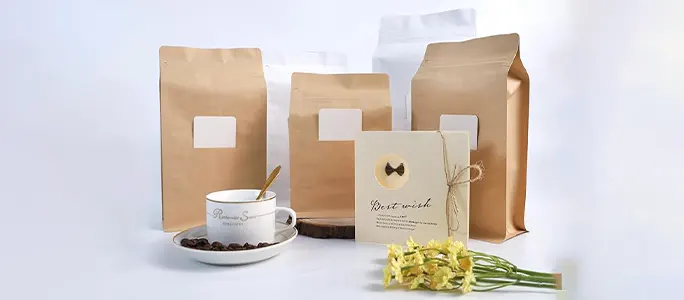
II. Global Popularization of Stock Coffee Bag With Card-Slit
The popularity of ready-to-stock coffee bags is closely linked to regional consumption characteristics, forming high-demand regions in Southeast Asia, China, Europe, and the United States, and becoming an important part of the local coffee ecosystem.
1. Southeast Asia: An Essential Choice for Street Food Culture
In countries such as Vietnam and Laos, ready-to-stock coffee bags are the mainstream packaging for street vendors and mass consumption:
- Vietnam’s green aluminum foil ready-to-stock bags—which echo the local coffee plantation landscape—are used for 17g single-serve 3-in-1 coffee, with a unit cost of only $0.013 and daily usage exceeding 1 million units.
- Laotian iced coffee vendors use a combination of "transparent inner bags and kraft paper outer bags", with a set cost of less than $0.008, which can maintain a chilled temperature for 90 minutes at 32°C, facilitating cross-border brands to recreate authentic flavors.
2. China: A "Start-Up Packaging" for Startups and E-Commerce
Demand for ready-to-stock coffee bags in the Chinese market is mainly driven by two factors: startups and e-commerce:
- In entrepreneurial hubs such as Shanghai and Guangzhou, 80% of emerging specialty coffee brands use ready-to-stock coffee bags in their early stages; by adding simple labels, these brands can achieve basic brand visibility.
- The rise of drip coffee has driven segmented upgrades. Entry-level drip coffee products (such as brands like Yongpu) adopt ready-to-stock packaging, reducing the cost per pack by 30% and accelerating the popularization of specialty coffee.
3. Europe and the United States: A Flexible Choice for Small-Scale Roasteries
In mature markets, ready-to-stock coffee bags are favored by small-scale roasteries:
- "Micro-lot coffee" enterprises in the United States use kraft paper ready-to-stock bags with customizable labels to convey the artisanal vibe of hand-roasted coffee.
- The European market prefers ready-to-stock aluminum foil bags with hanging holes to adapt to the display needs of supermarkets and markets. Purchase volumes in Germany and France grow at a rate of 35% annually, balancing small-batch orders and display requirements.
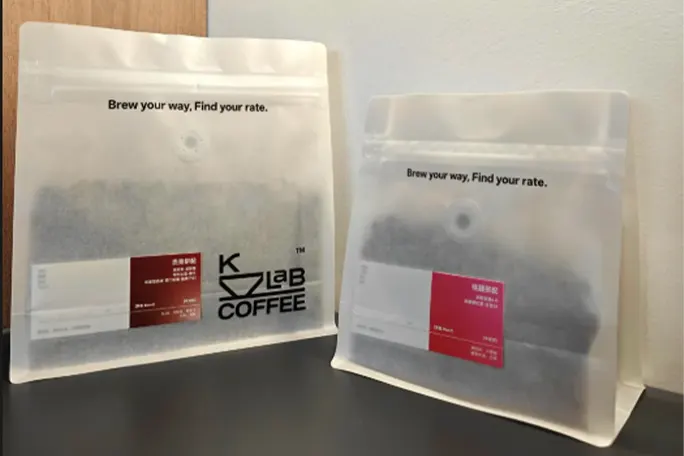
III. Stock Coffee Bag With Card-Slit: Functional Innovation in Ready-to-Stock Packaging
As ready-to-stock coffee bags become an industry standard, the addition of Card-Slit design has addressed the shortcomings of traditional packaging, initiated an experience upgrade, and quickly led the industry trend.
1.Card-Slit Design: Minor Modifications for Significant Improvements
Coffee Bag With Card-Slit feature integrated Card-Slits on the side or top of self-standing bags, achieving three key breakthroughs:
- Display Upgrade: Compatible with standard hanging racks, enabling vertical suspension and increasing display space by 40% compared to traditional self-standing bags. This works particularly well in small-space scenarios such as convenience stores, enhancing visual appeal and impulse purchase rates.
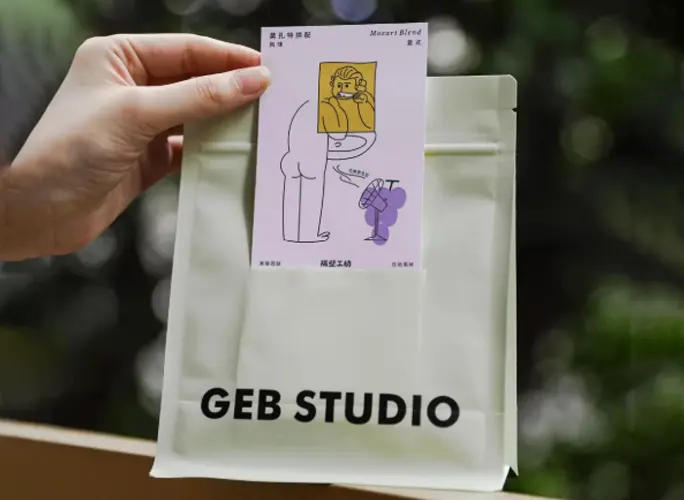
- Information Extension: Custom cards can be inserted into the Card-Slits to mark roasting dates, brewing parameters, or origin stories—eliminating the need for additional printing costs. For specialty coffee, detailed information such as altitude and processing methods can enhance consumer trust.
- Scenario Adaptation: Wave-shaped Card-Slits specially designed for drip coffee can fit cup mouths of 80-120mm, withstanding 500 brewing cycles without deformation. They replace traditional paper drip stands, simplifying the structure while improving stability.
This design poses no sealing risks, with the unit cost increasing by only $0.0005, still maintaining cost-effective advantages.
2.Card-Slits Becoming a Trend: Driven by Three Types of Demands
Since the second half of 2024, major domestic suppliers have launched Stock Coffee Bag With Card-Slit, which now account for 38% of leading suppliers’ total output. This trend is jointly driven by retail, consumption, and environmental protection demands:
- Retail Demand: Scenarios such as convenience store hanging racks, supermarket layered displays, and market stalls require packaging adaptable to multiple scenarios. Coffee bags with Card-Slits are "multi-purpose in one pack", helping SMEs access more sales channels.
- Consumption Demand: Coffee enthusiasts pay attention to quality details, and cards with brewing guides can increase repurchase rates. Consumers perceive such packaging as "more professional and reliable".
- Environmental Protection Demand: Integrated Card-Slits reduce waste from stickers or tags. coffee bags with Card-Slits use poly lactic acid (PLA) biodegradable materials, achieving a degradation rate of 90% after 180 days of composting and reducing carbon footprint by 42%—aligning with the industry’s green transformation trend.
IV. Future Trend: Stock Coffee Bag With Card-Slit Becoming a "Basic Standard"
With the popularization of technology,Card-Slits will become a standard configuration for ready-to-stock coffee bags and develop in three directions:
Material Upgrade
The industry is moving toward "full biodegradability + high performance". For example, using coconut fiber-woven Card-Slits paired with kraft paper bags; this material combination retains structural strength while enabling full biodegradability and improves oxygen barrier properties to extend the flavor retention period.
Smart Integration
NFC (Near Field Communication) chips will be integrated into Card-Slits. Consumers can scan the chips to check the coffee’s origin, access brewing tutorials, or join brand membership programs—realizing the integration of physical packaging and digital services. Large-scale production is expected to be achieved by 2025.
Conclusion
Ready-to-stock coffee bags have lowered the entry threshold for small and medium-sized coffee enterprises thanks to their low cost and high flexibility; the Card-Slit upgrade has further enhanced their display capabilities, user experience, and environmental performance. For emerging brands, choosing Stock Coffee Bag With Card-Slit means "achieving professional brand presentation at a controllable cost"; for mature brands, such packaging can be used as trial products or limited-edition packaging to quickly respond to market demands. In the future, Stock Coffee Bag With Card-Slit will become the "basic standard" of coffee packaging, helping more high-quality coffee enter people’s daily lives.
Build your bag and get a quote
Build your bag and get a quote