

업데이트 4 시간 전에
드립 커피 포장: 설계, 주머니와 소매 박스 디자인.

ypak.coffee.
YPAK 패키징 그룹은 2011 그리고 다음과 같이 형성되었다. 3 홍콩에 기반을 둔 기업들, 동관과 포산. 우리는 중국에서 가장 큰 커피백 제조업체 중 하나가 되었습니다. 저희는 스위스산 최고의 WIPF 밸브를 사용하여 커피를 신선하게 유지합니다.
여러 국가에 적용된 플라스틱 금지 정책에 부합하세요, 우리는 지속 가능한 포장 가방을 연구하고 개발해 왔습니다, 재활용 가능하고 퇴비화 가능한 파우치 같은 것들.
최소 수량은 없습니다, HP 25K 인디고 디지털 프린팅 서비스에서는 컬러 플레이트가 필요하지 않습니다.
YPAK을 방문하실 수 있습니다.
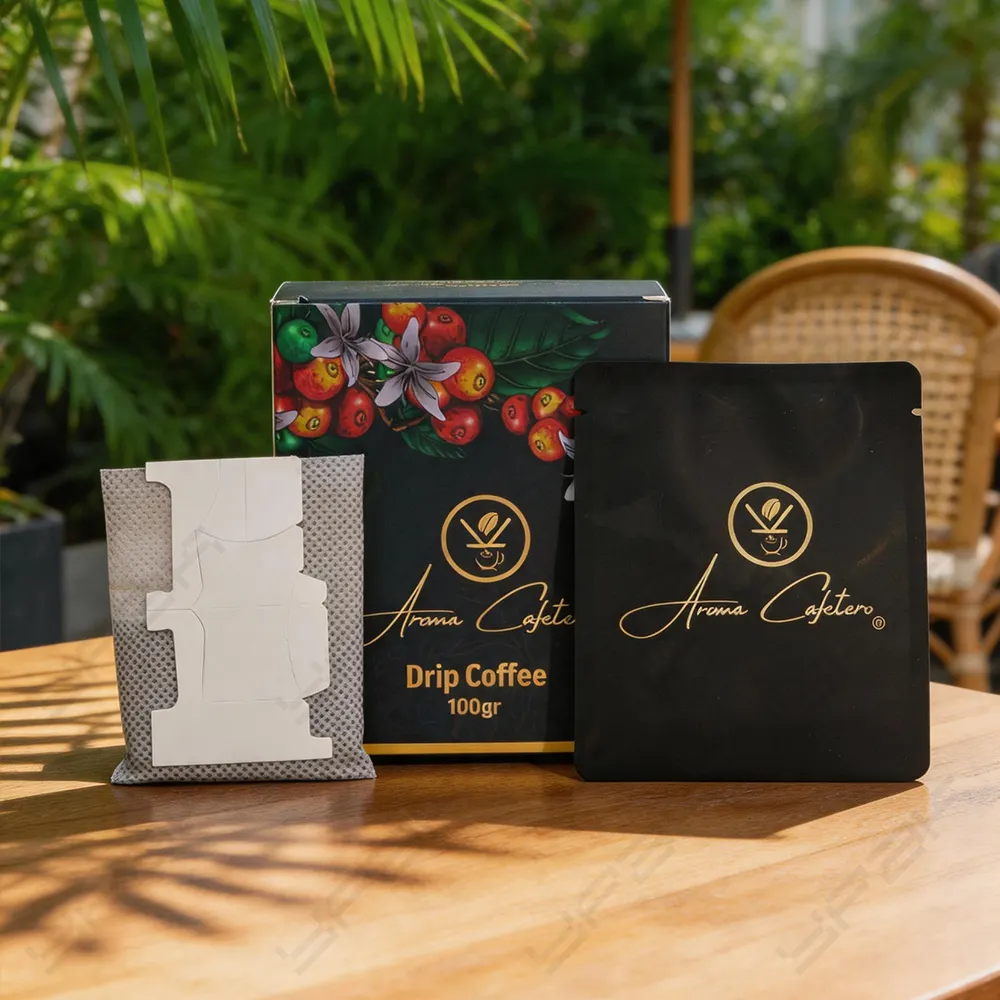
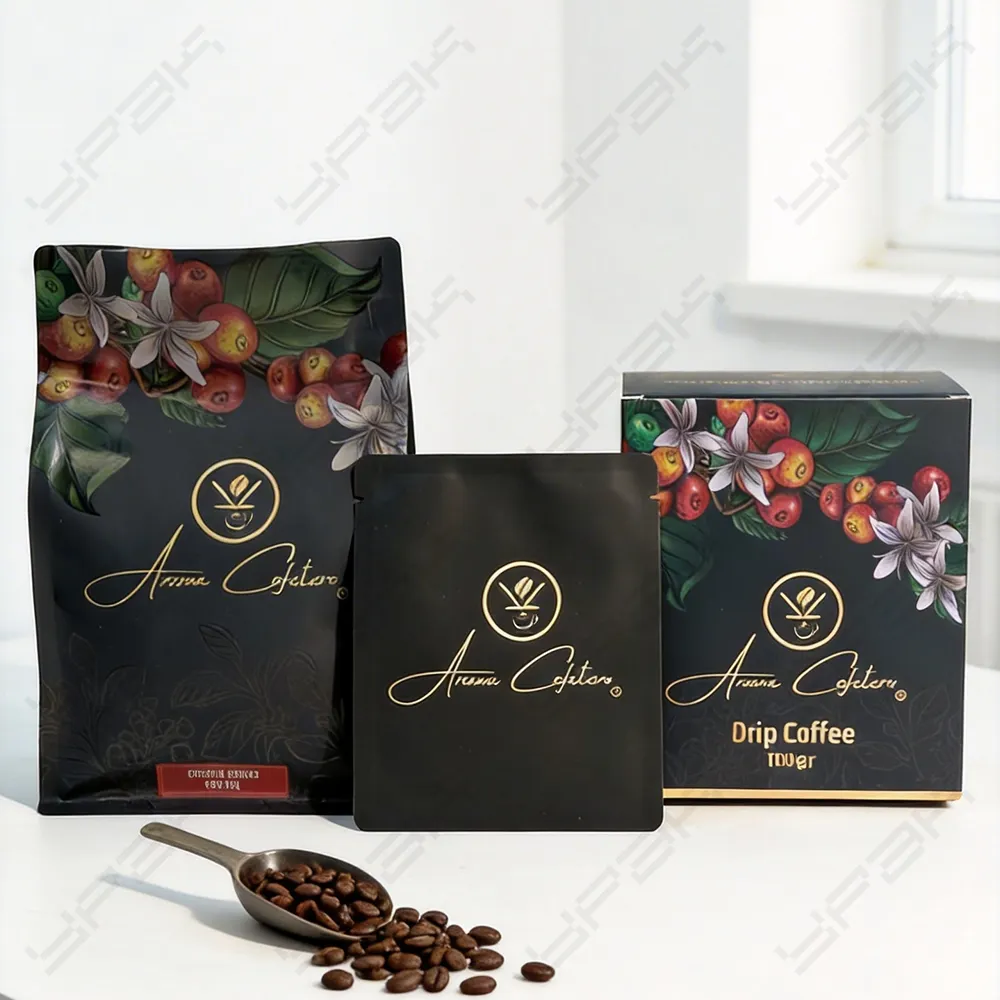
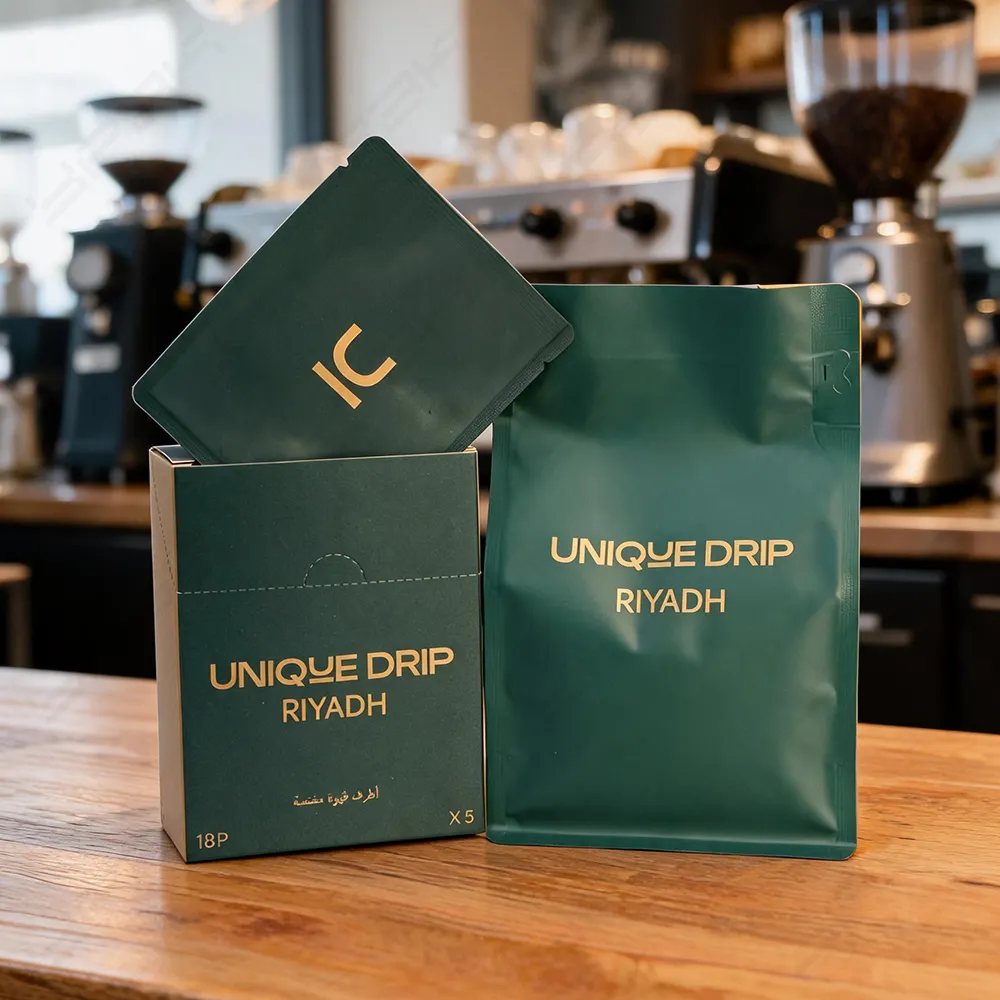
드립 커피 포장은 다성분 시스템입니다, 이 작품은 한 번의 양조 순간에 기반을 두고 있습니다. 전통적인 통 콩 봉지와는 달리, a portion of a cup of ground coffee is packaged in a filter, a single barrier sachet and in most instances, a printed retail carton. The package must maintain volatile aroma, must be able to withstand automated filling and closures, easy to open, and help the consumer to brew, without additional equipment.The researching consumers of this kind of packaging usually have to make comparisons related to the material selection, 개인화, and the resources of suppliers. In a coffee brand, the most attractive package is not practical but the combination that will ensure the consistent extraction, 유통기한, 생산 효율, and a reasonable communication of the brand.
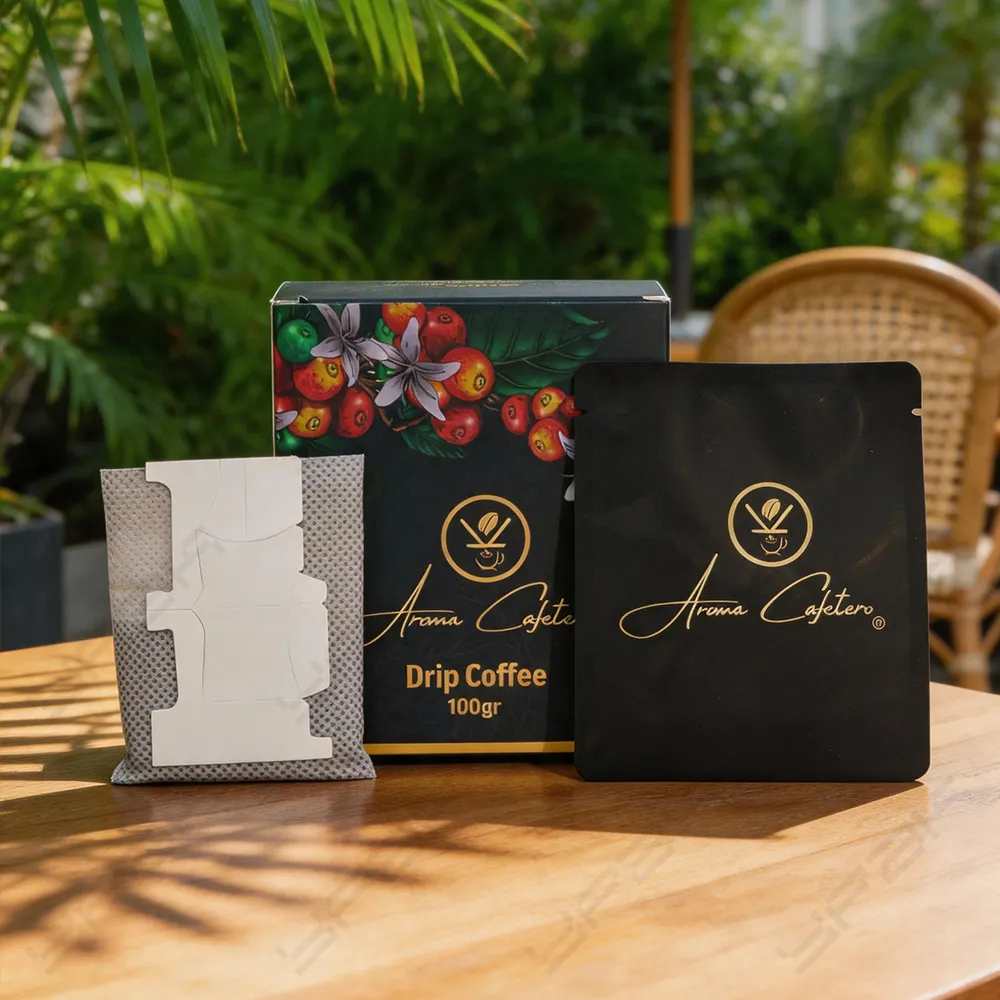
Map Drip Coffee Packaging System.
Each layer has its functions separated by a reliable specification. The filter regulates the water flow and holds up the coffee bed. The outer sachet offers most effective shield to oxygen and moisture. The portions are packaged in the carton and provide printable area and protect the sachets against crushing and abrasion.
Filter Bag and Hanging-Ear Construction.
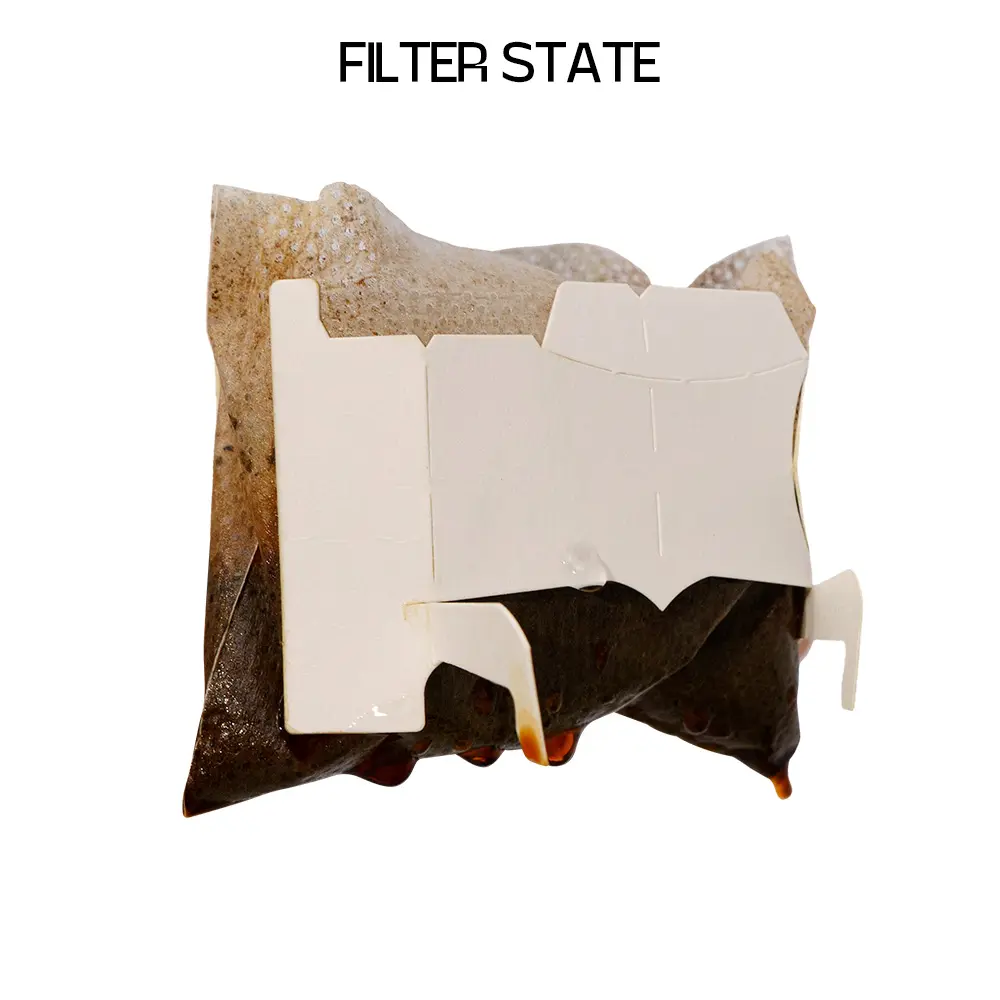
There should be no tearing when opening hanging-ear filters and the filters are supposed to be stable over a common mug diameter. The extraction and handling of filter are influenced by filter weight, pore structure, weld strength and ear geometry. YPAK develops non-woven Japanese material filters that can be heat-sealed and flushed with nitrogen and placed in the flat pouches or boxes. Those attributes are yet to be tested using the dose, 그라인드, 로스트, and the desired volume of water of the brand.
A filter trial must check:
- Mounting on stable, narrow and wide cups being used by the target market.
- No unexpected flow, no huge fines, bypass, overflow or collapse of filters.
- Adequate seam and hanger strength post filling, 바다 표범 어업, storage and transportation.
Select the Around Shelf-Life Risk of Individual Sachet.
The ground coffee starts to lose the aroma at a higher rate as compared to whole beans since more areas are exposed. The individual sachet then assumes the most protective challenging task. The materials developed should be based on predetermined shelf-life goal and distribution climate, instead of a general order of foil packaging.
Compare Use Comparison of Barrier Structures.
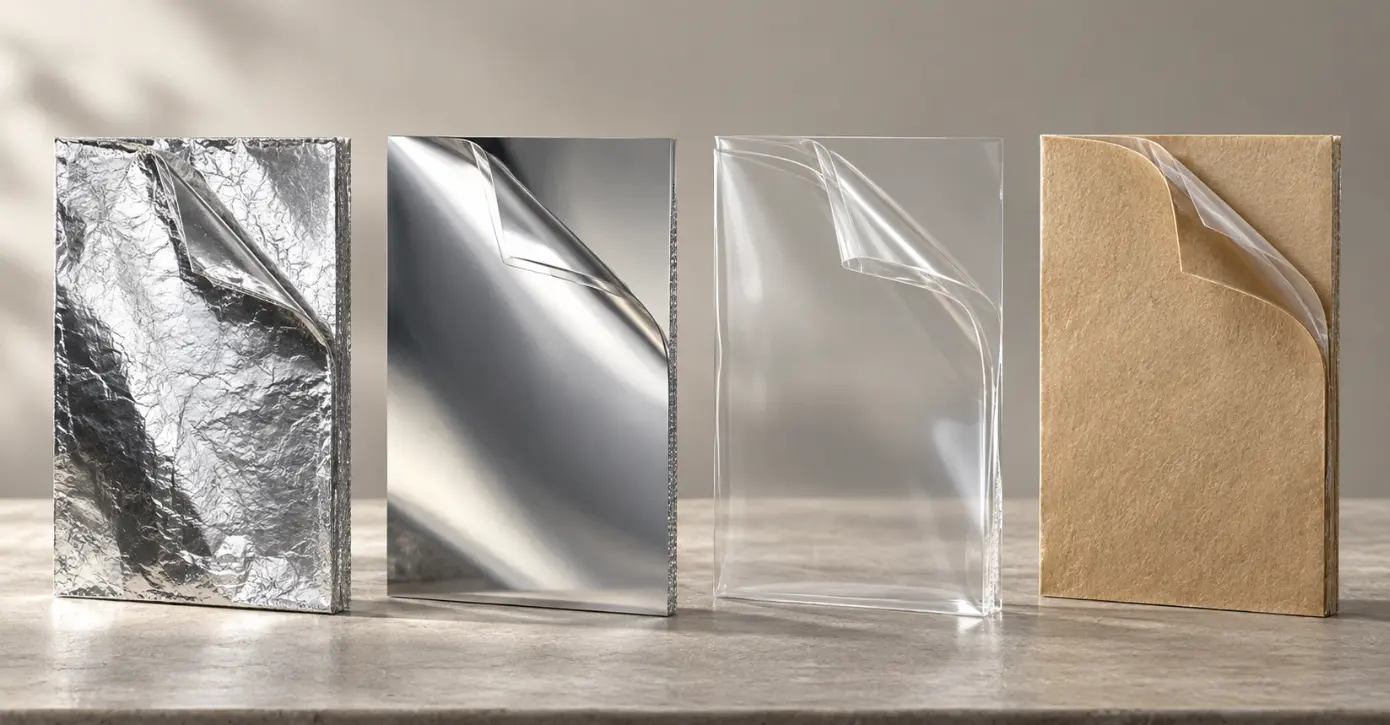
Aluminum foil laminates could be a suitable protection against light, 산소와 습기. A trade off of barrier, look and price can be achieved by metallized structures. Clear films can be used to increase product visibility, but it is necessary to carefully consider the transmission-rate. The appearance of paper-look laminates conveys a natural appearance, but the apparent layer of paper does not mean that the entire structure is recyclable.
Nitrogen Flushing and Seal Design.
To provide lower levels of residual oxygen before sealing, nitrogen flushing can be employed, but it should not be used instead of appropriate film or process control. Coffee dust in the seal region, insufficient dwell time, uneven pressure or piercing through folded filter segments can compromise protection. The sachet must also be able to tear well with a tear notch which would be positioned to ensure that when the consumer opens them, the filter would not be cut.
Record: During a test production run:
- Measurement method and amount of residual oxygen targets and post-packing.
- Adequate seal strength, 폭, look and leak-test.
- Operates machines based on machine temperature, 압력, 속도, and film-tracking.
Plan Printing Pilot Run to Scaled Production.
The printing options impact minimum order quantity, 소요 시간, 색상 일관성, and the possibility of opening multiple coffee origins. Digital printing is capable of lowering the run length and seasonal testing with minimal plate preparation. The production of gravure or flexographic can be cheaper on a large scale, but the commitment and set up requirements of the artwork is heightened.
Create a repeatable Artwork System.
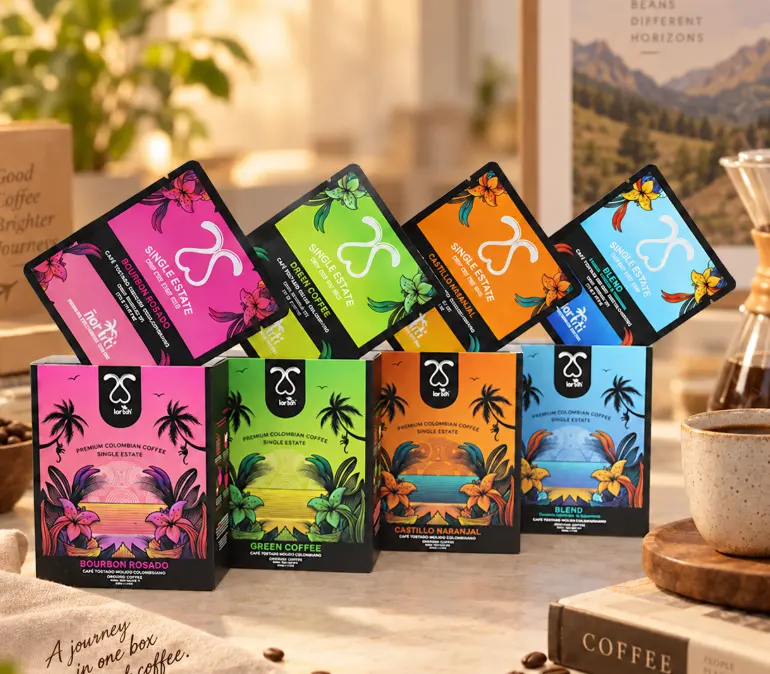
The outer sachet is in a limited space and therefore it must focus on the brand, coffee identity, key brewing cues and necessary coding. A fixed template allows the color, 기원, tasting notes or lot details to be changed without the need to recreate the entire design. Longer sourcing stories, preparation guidelines, certifications and disposal instructions can be included in the retail box.
Prior to the print approval, verify:
Dieline orientation, tear-notch position, seal zones, barcode quiet zones and code areas.
CMYK 또는 팬톤, physical colour proof, finish and acceptable colour tolerance.The size of printable type when completely sealed and folded and seen under normal retailing conditions.
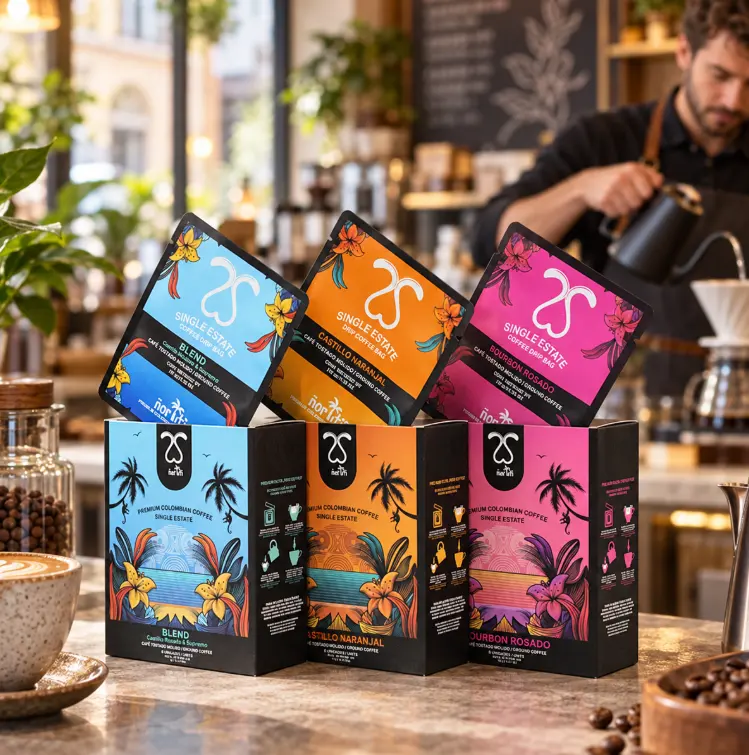
Design Retail Box: Secondary Packaging.
The retail package must be made with sachets that that have been filled on the planned line. The flattened sample bags can lead to flattened cartons, distended panels or ineffective packing. Five and ten packs can be utilized in standard formats to reduce development time, and custom counts can be used to facilitate subscriptions, 환대, 선물, or assorted coffee programs.
Balance Shelf Presence and Logistics
A carton should be square, shield the sachets and convey the form in a concise manner. Retail volumes of any size should be packed into folding cartons; gifting should be packed into drawer or rigid boxes; as an added safety to e-commerce corrugated mailers may be used. A retail carton cannot be supposed to be in a position to withstand the test of parcel distribution without a suitable shipping pack.
Comparison of filled design with 3 performance measures:
- Quantity of sachets in each carton, quantity of cartons in each master case and unused capacity at each stage.
- Resistance to compression, drop-performance, barcode scanning and shelf facing visibility.
Time to assemble (manual or automatic) and safety and simplicity of closing sachet.
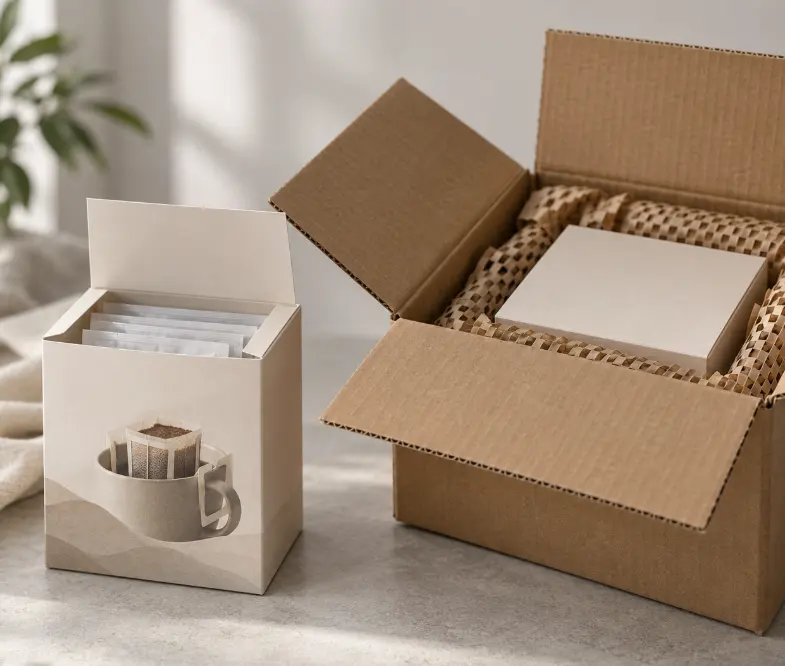
Build Sustainability Claims of Authenticated Parts.
Drip coffee packaging is a combination of food contact filters, 배리어 필름, 잉크, adhesives and paperboard and thus, one general environmental statement can be inappropriate. The sachet itself is not recyclable in a recyclable box and compostable materials demand proper collection and an environment to be processed.
Start with some measurable reductions: trim every layer, eliminate any unnecessary inserts, and minimize laminations that are not a perfect fit, and the instructions to be followed when disposing of filters, sachets and cartons should be specific to the filter, sachet and carton. Ask suppliers to submit material declarations, food-contact records, barrier records, and certification records that are applicable to the destination market. The claims are to be explanations as to what the package is and where it can be processed in reality.
| Sachet Direction | Typical Strength | Best-Fit Application | Important Check |
| Foil laminate | Light protection as well as high aroma. | Export and increased shelf life. | Seal integrity and flex cracking. |
| Metallized laminate | Balance of print-value and barrier. | Mainstream specialty retail | Actual oxygen and moisture data |
| Clear high-barrier film | Product visibility | Reduced length of programs and restrained channels. | Light and shelf-life exposures. |
| Paper-look laminate | Natural surface appearance | Craft and gifting collections. | Separating and disposal route of layers. |
Certify a supplier of Drip Coffee packaging.
Design capability and manufacturing control should be linked by a supplier evaluation. The packaging set of drip coffee offered by YPAK includes filters, high-barrier flat packets, and a retail box that can decrease the gaps in fits and communication between the parts. 그렇지만, buyers ought to approve specifications, samples and test methods as compared to the application of a one-stop description.
A professional request of quotation must consist of:
- Dose of coffee, type of filter, size of sachet, number of packs, 재료, finish and volume per year.
- Filling procedure, nitrogen demand, desired shelf life, market destination as well as compliance requirements.
- Sample specifications, acceptance limits, lead-time, packaging process and shipping terms.
결론
Good drip coffee packaging is a mix between brewing performance, safeguarding aroma, production and retail communication. Begin with dose of coffee and filter behavior, select the sachet according to known barrier and sealing needs and then frame filled samples and channel needs. A disciplined specification develops a package which is easier to produce, more secure to transport, more understandable to operate and more believable on the shelf.
자주 묻는 질문
각본이
ypak.coffee.
이팍
YPAK 패키징 그룹은 2011 그리고 다음과 같이 형성되었다. 3 홍콩에 기반을 둔 기업들, 동관과 포산. 우리는 중국에서 가장 큰 커피백 제조업체 중 하나가 되었습니다. 저희는 스위스산 최고의 WIPF 밸브를 사용하여 커피를 신선하게 유지합니다.
여러 국가에 적용된 플라스틱 금지 정책에 부합하세요, 우리는 지속 가능한 포장 가방을 연구하고 개발해 왔습니다, 재활용 가능하고 퇴비화 가능한 파우치 같은 것들.
최소 수량은 없습니다, HP 25K 인디고 디지털 프린팅 서비스에서는 컬러 플레이트가 필요하지 않습니다.
YPAK을 방문하실 수 있습니다.